1013-PPWR
PPWR Compliance Starts with Your Packaging
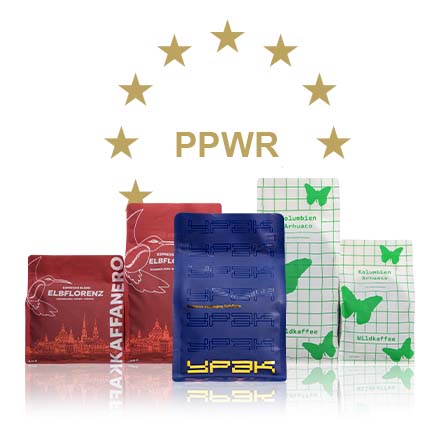
The EU Packaging and Packaging Waste Regulation has applied since 12 August 2026. We help coffee brands get the documents, the labelling and the material decisions right — and reserve the 2028 label in the same artwork revision, so you print once instead of twice.
Four dates that decide your packaging timeline
Obligations Since 12 August 2026
Six items, all verifiable against the official text. Where a technical detail is still to be set by an implementing act, we say so rather than filling the gap with a guess.
| Obligation | What it requires | Legal basis |
|---|---|---|
| Declaration of conformity | A written declaration per packaging type, kept with the technical documentation: 5 years for single-use packaging, 10 years for reusable packaging from the date it was placed on the market. | Annex VII, point 4 |
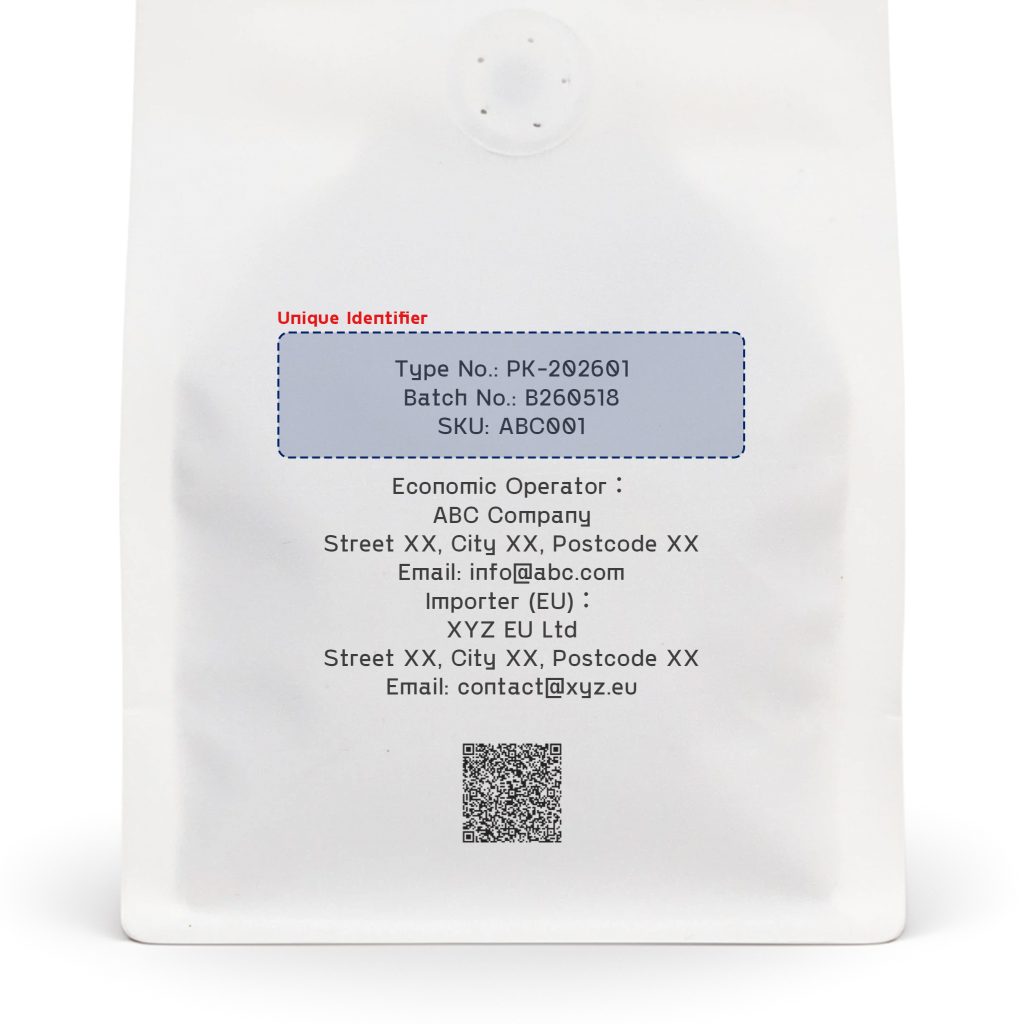
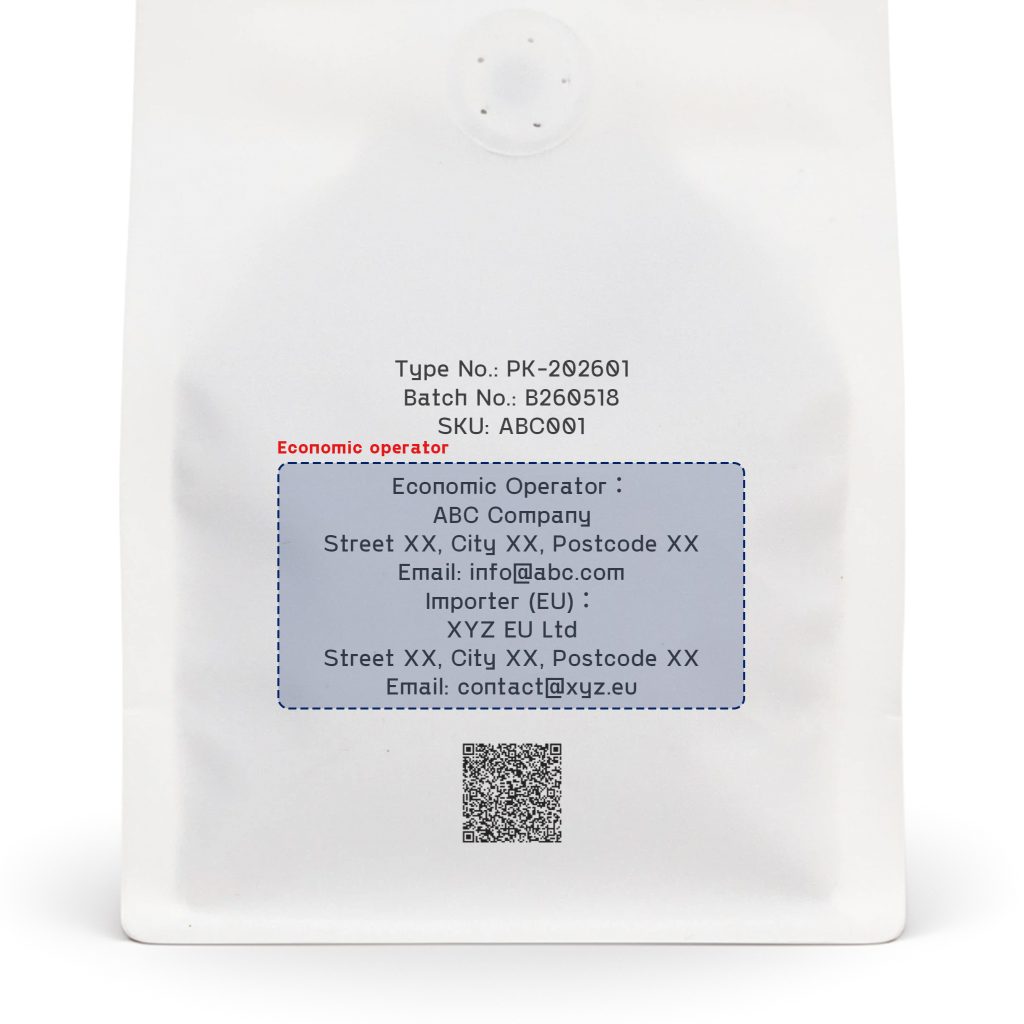
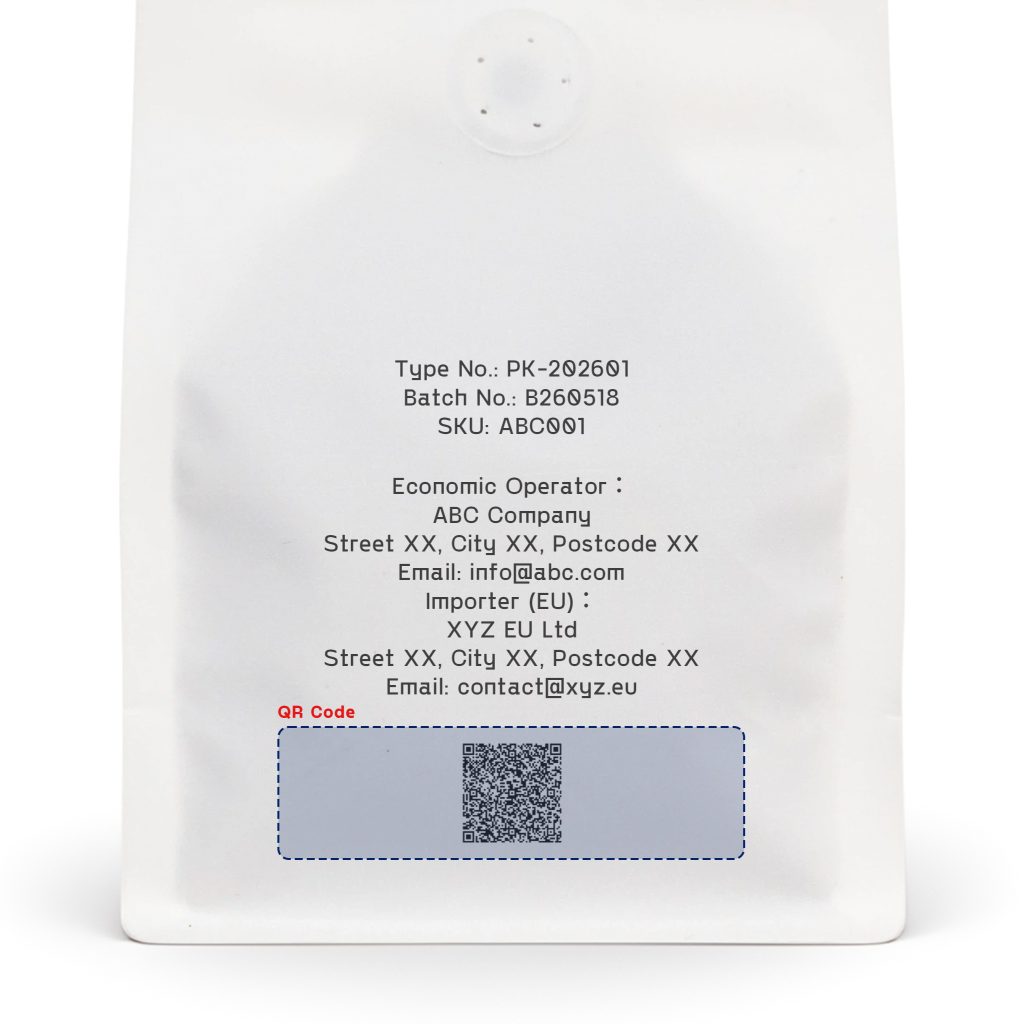
| Identification and operator details | Type, batch or serial number or another identifying element; name or registered trade mark, postal address and electronic contact (may be provided via QR code or another data carrier). Information must be clear, understandable and legible. | Art. 15(5), (6), (7) |
| PFAS limits | Food-contact packaging must not contain PFAS at or above: 25 ppb for any single PFAS, 250 ppb for the sum of PFAS, 50 ppm for PFAS including polymeric PFAS. If total fluorine exceeds 50 mg/kg, proof of the fluorine source must be provided on request. | Art. 5(5) |
| Heavy-metal limits | The sum of lead, cadmium, mercury and hexavalent chromium must not exceed 100 mg/kg, demonstrated in the technical documentation. | Art. 5(4), 5(6) |
| Packaging minimisation | Packaging must be designed to minimise volume and weight while performing its function. For sales packaging, empty space must be reduced to the minimum necessary from 12 February 2028. | Art. 10(4) |
| EPR registration | Producers must register in the national register of producers; distributors must verify that registration before making packaging available. | Art. 44; Art. 20(2)(a) |
The Deadlines After 2026
The second wave is already scheduled. Two of these dates directly affect coffee packaging formats, not just the carton around them.
| Date | Requirement | Why it matters for coffee |
|---|---|---|
| 12 Feb 2028 | Permeable tea, coffee and other beverage bags, and soft single-serve units, must be compatible with industrial composting; fruit and vegetable stickers too. | Drip bags and hanging-ear bags fall in this category. Non-permeable machine units (for example rigid capsules) are a separate category and are only required to be compostable where a Member State opts to require it. |
| 12 Aug 2028 | Harmonised label: material-composition pictograms, compostability information where relevant, and a digital identifier. Applies from 12 Aug 2028 or 24 months after the implementing acts, whichever is later. | Back-panel space on a pouch is finite. Reserving the label area during your next artwork revision avoids a second print change. |
| 1 Jan 2030 | Recyclability performance grades A (≥95%), B (≥80%) or C (≥70%) required to place packaging on the market, unless the delegated acts shift the date later. Plastic parts must meet minimum recycled content: 10% for non-PET contact-sensitive packaging, 30% PET contact-sensitive, 35% other plastic. | Multi-material laminated pouches are the structures under most pressure — the grade is assessed per packaging unit by predominant material. |
| 1 Jan 2038 | Only packaging in grades A or B may be placed on the market. | A structure that only reaches grade C has a defined end date. Material roadmaps should be built backwards from 2038. |
Labelling and Artwork Readiness
This is where compliance meets print. The information must fit the format, survive filling, and stay scannable — and the 2028 label space should be reserved in the same revision.
Printable area differs by format
Flat bottom pouches provide the largest clean back panel, making them suitable for a consolidated information block. This area can be used for product details, preparation instructions, compliance information, and branding elements.
To maintain a clean appearance, avoid placing important information on the base fold or bottom gusset, as these areas may not remain visible after filling.
Side gusset pouches offer flat front and back panels for primary branding and product communication. The gusset area can be used for supporting information, such as secondary details or additional instructions.
Important graphics or key information should not be placed across the gusset, as the panel shape changes after filling and may affect readability.
Folding cartons provide multiple printable panels, allowing information to be separated according to function. Different sides can be used for branding, product descriptions, ingredients, certifications, and usage instructions.
Avoid placing critical information across seams or score lines, as folding may affect the visual consistency and readability.
For drip bag packaging, the outer carton usually carries the required product information, while individual sachets focus on essential identification and presentation.
Because single sachets have limited printable space, avoid placing too much information directly on each unit. A clear hierarchy between the outer carton and inner sachets helps maintain an organized package design.
Capsule cartons provide dedicated space for product identification and compatibility information. The available panels allow brands to communicate capsule type, usage details, and product specifications clearly.
Avoid compressing too much information into one panel by reducing font size, as this can affect readability and the overall packaging experience.
Material identification code
Choose the code from the structure specification, never from the surface appearance. A pouch that looks like paper but contains a plastic or aluminium barrier is composite packaging and must be marked accordingly.
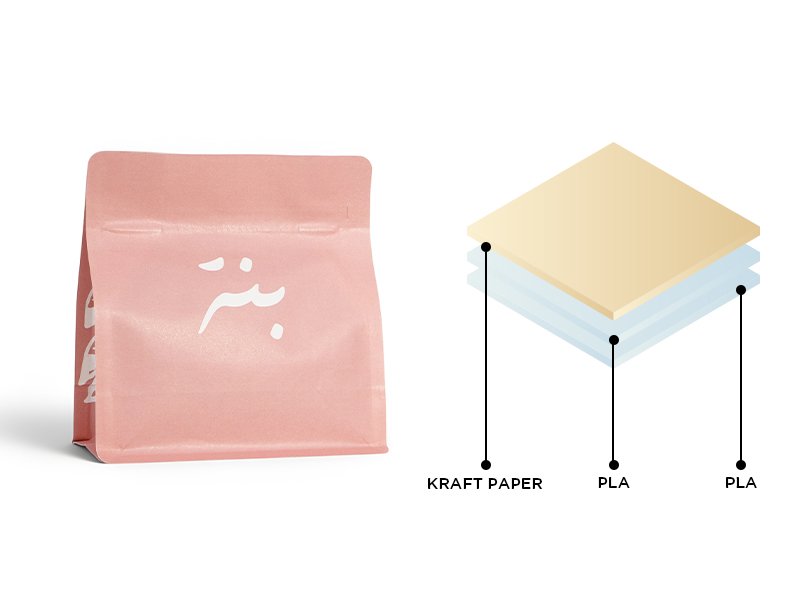
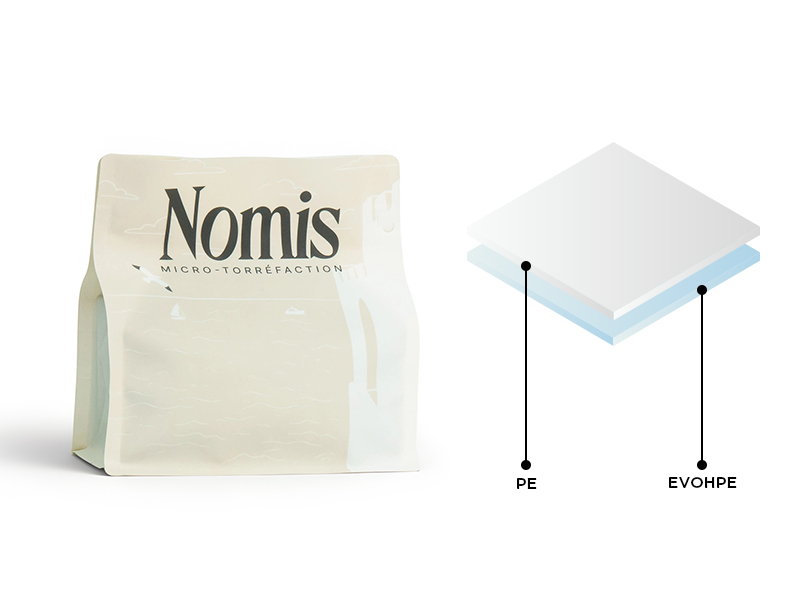
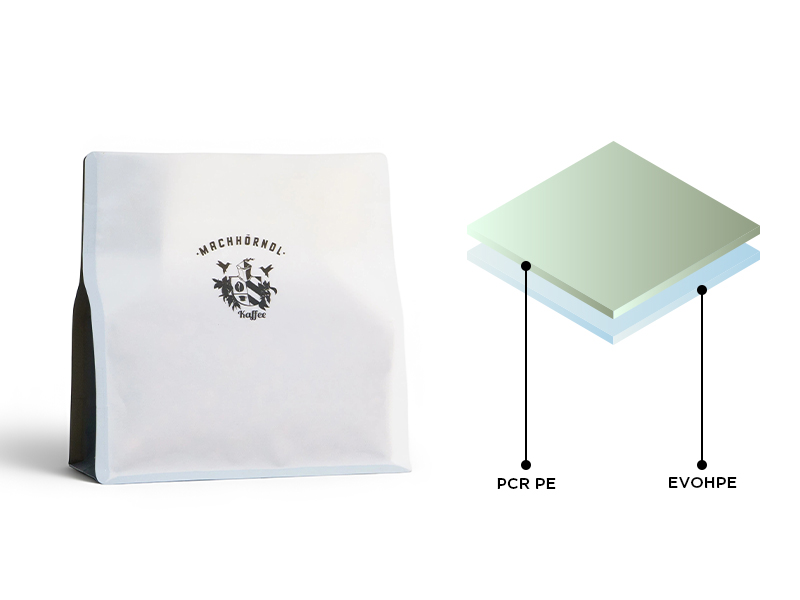
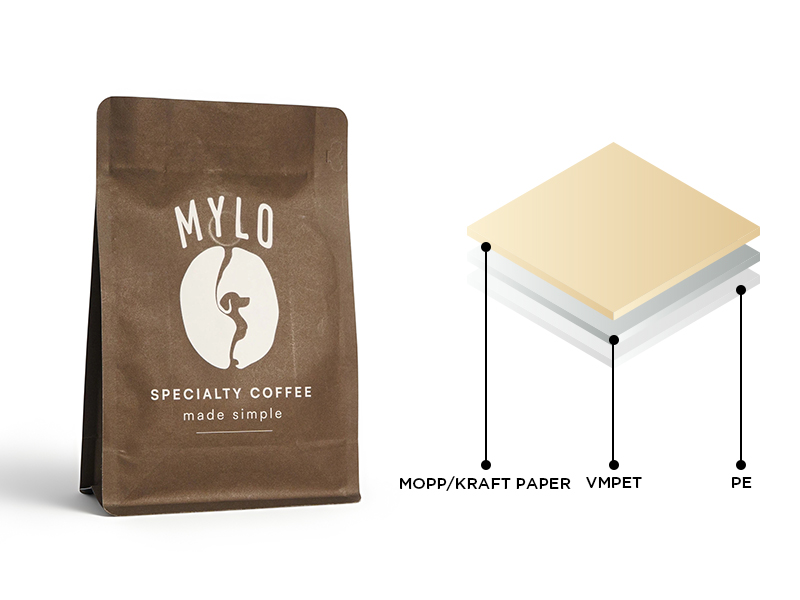
Reserve for 2028 in this revision
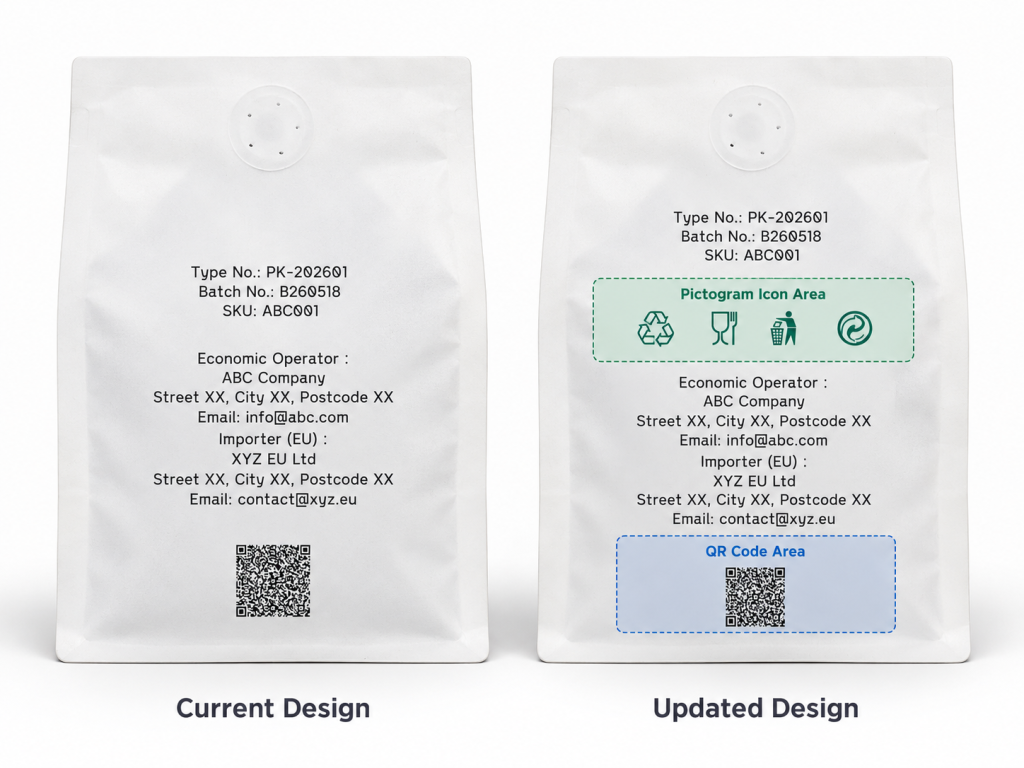
Three reservations cost almost nothing now and a full redesign later:
- A defined block for the material-composition pictogram
- A QR area on a flat, non-flexing part of the pack
- A marking area for reusable packaging where relevant to your range.
Materials Against the PPWR Direction
An honest comparison, including the structure that will come under pressure. Barrier performance figures are our tested values; recyclability grades remain subject to the Commission’s delegated acts.
| Image | Structure | Barrier | Recycling route | Certification | Adapts to |
|---|---|---|---|---|---|
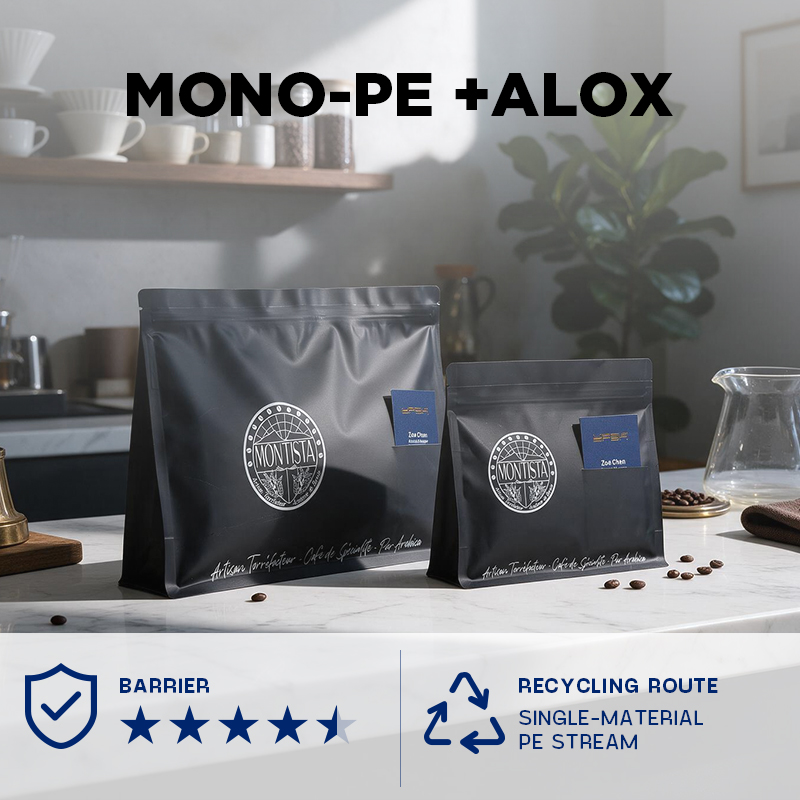 | Mono-PE + AlOx | High barrier; OTR < 5 cc/m²/day, WVTR ≤ 0.5 g/m²/24hrs | Single-material PE stream | Recyclability assessment available | 2030 grade target, single-material direction |
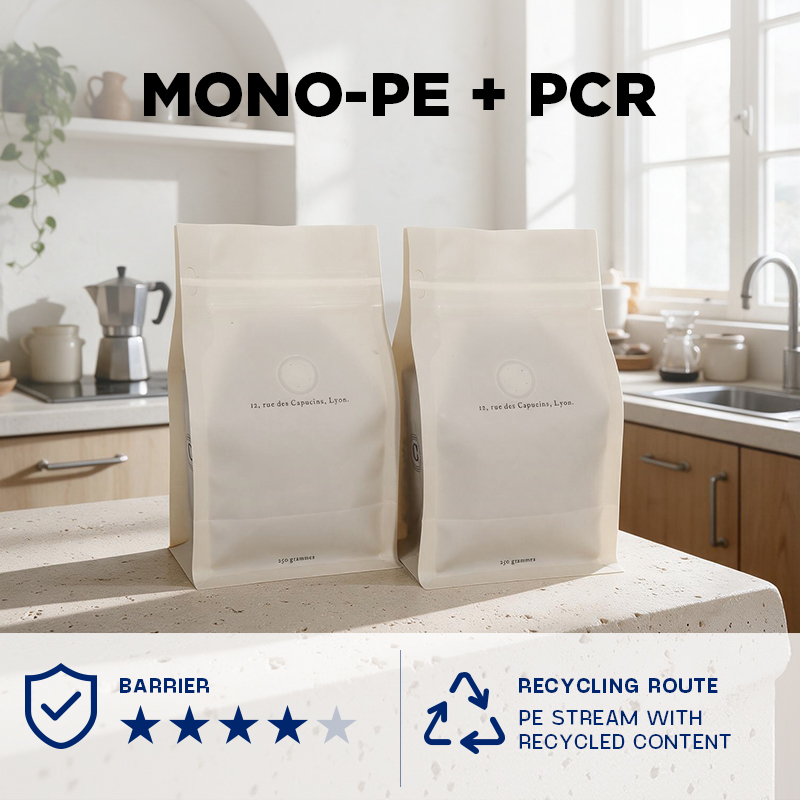 | Mono-PE + PCR | Medium to high, application dependent | PE stream with recycled content | GRS / RCS with transaction certificate | Recycled-content requirements (10% non-PET contact-sensitive from 2030) |
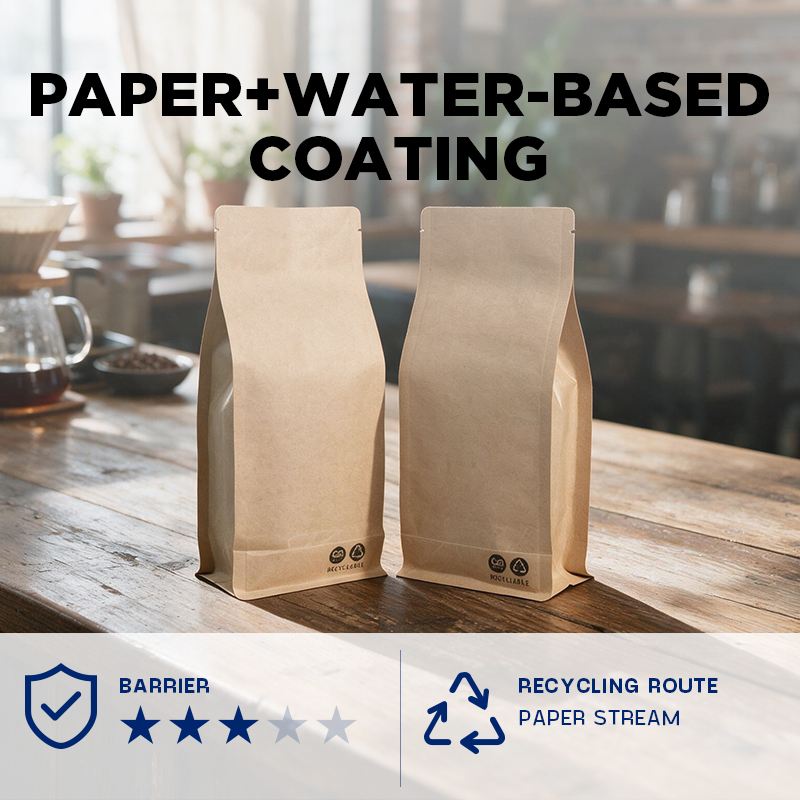 | Paper + water-based coating | Medium; suited to shorter shelf life or inner barrier | Paper stream | FSC chain of custody | Paper-based sorting and consumer communication |
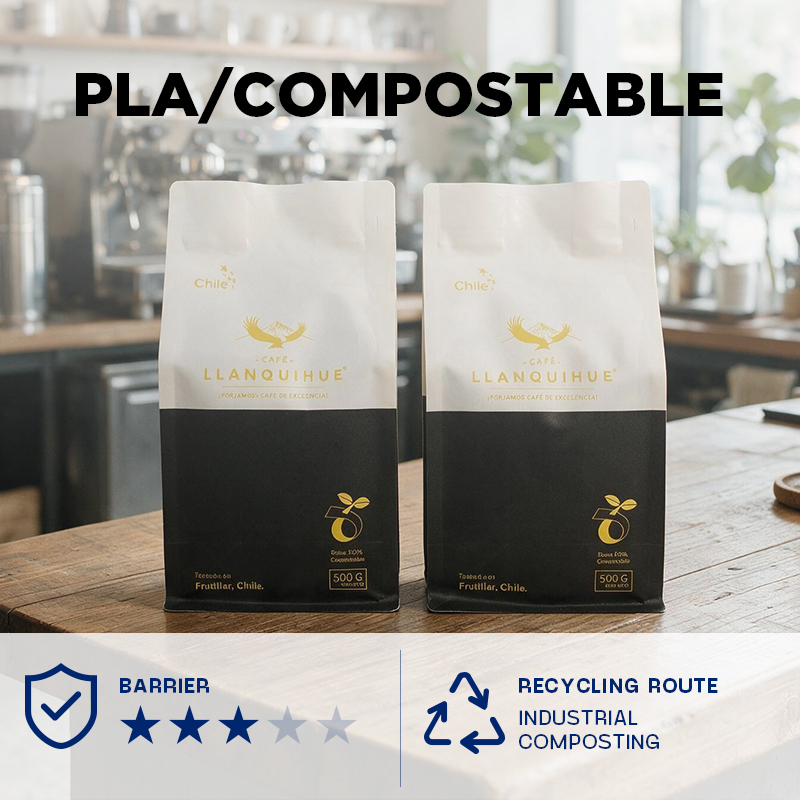 | PLA / compostable | Application dependent; verify shelf life | Industrial composting | Industrial composting | Drip bags and permeable single-serve units (12 Feb 2028) |
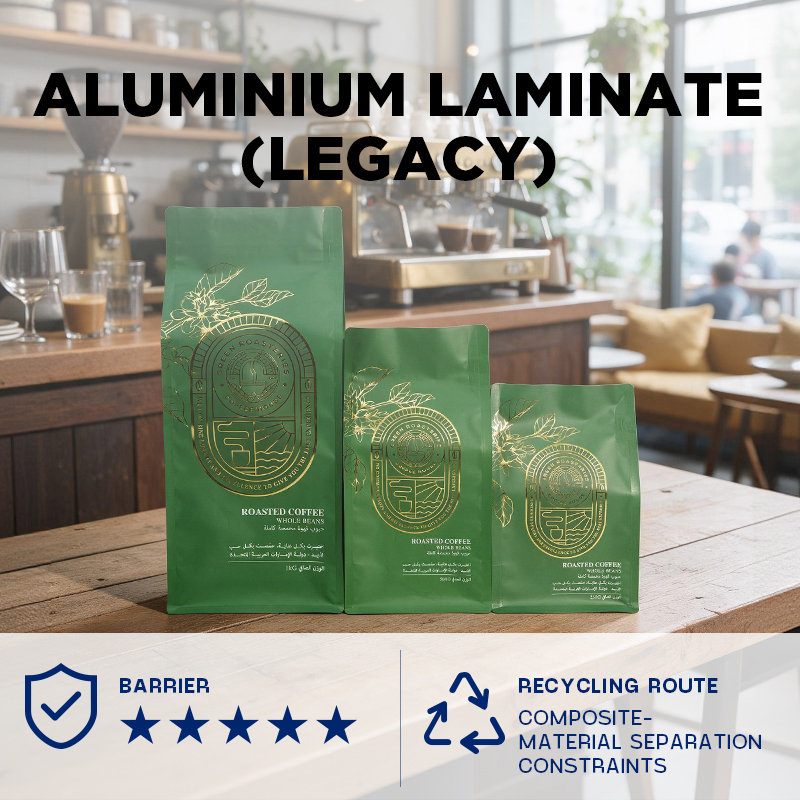 | Aluminium laminate (legacy) | Very high barrier | Composite material separation constraints | – | Under pressure from 2030 grading; migration path recommended |
How We Support You
General compliance pages stop at the regulation. These are the points where the regulation meets the way coffee is actually packed, shipped and kept fresh.

PPWR Data Pack: structure declaration, layer weights, material code, batch rule and test references — the input data for your declaration of conformity.

Artwork audit: your print file checked panel by panel against the identification and labelling requirements, returned as a gap list.

Material switch and shelf-life validation: moving to mono-material or higher recycled content, with OTR and WVTR re-testing so the coffee keeps its window.
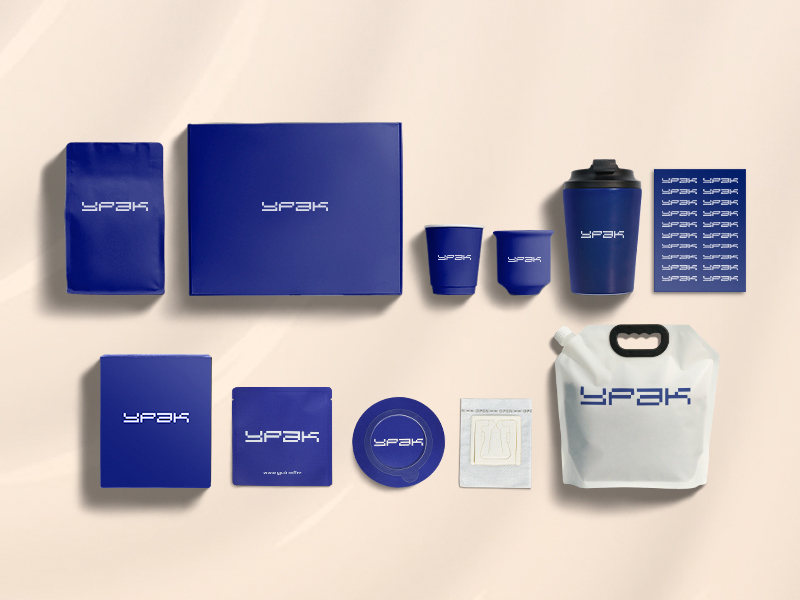
One-stop formats: pouches, cartons, drip bags, capsule boxes and cups from one manufacturing network, so the compliance logic stays consistent across your range.

Version and print planning: multi-SKU artwork sets with consistent identification data and 2028 reservations, using digital printing where short runs and frequent changes would otherwise be costly.

Regulatory watch: we track the implementing and delegated acts and update this page as they land, so you do not have to monitor the Official Journal yourself.